The exhibition presents the complex story of the intermingling of various, often contradictory, artistic styles against the backdrop of a more or less linear timeline. Emphasis is placed primarily on paintings and sculptures, which introduce visitors to the basic currents and tendencies of Czech modern art in the monitored period. A distinctive feature of the second part of the exhibition is the placement of Czech post-war art into a broader Central European artistic context.
Art of the first half of the 20th century
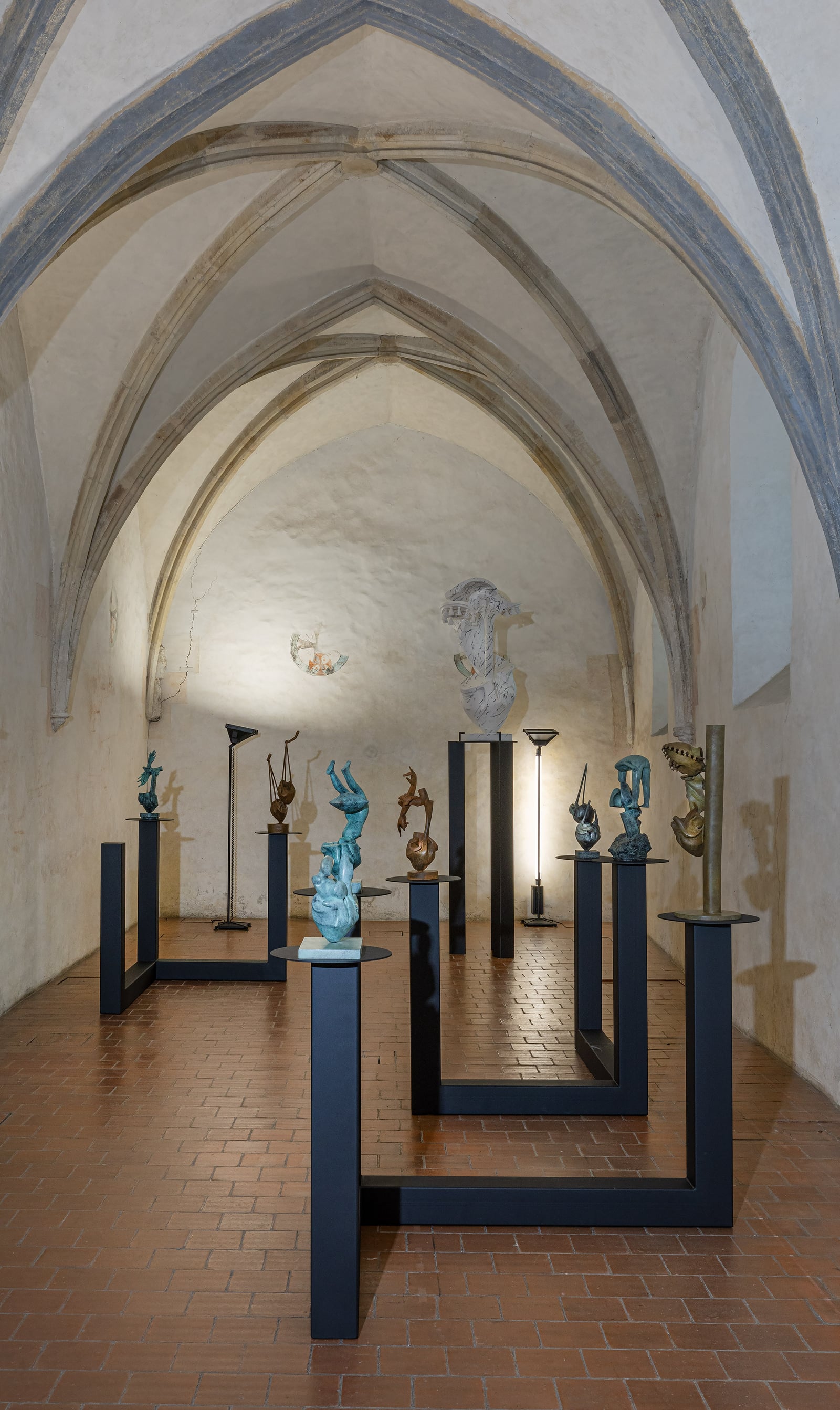
The Mansarda exhibition space is dedicated to art from the first half of the 20th century. The introduction to the exhibition captures the lingering influence of Impressionism and symbolist tendencies at the beginning of the century. However, its main focus is a thorough and rich presentation of modern movements, from Expressionism, Cubism, and Cubo-Expressionism to Civilism. The exhibition also does not overlook abstract manifestations and Surrealism from the turn of the 1920s and 1930s. Its conclusion features the work of artists from Skupina 42. Special attention is also paid to modern landscape painting, whose most prominent examples, albeit through a different artistic language, also capture the atmosphere of their time of creation.
A completely unique part of the exhibition is a collection of chamber works by one of the founding figures of European abstraction, Adolf Hölzel, a native of Olomouc, which the museum acquired thanks to the generous donation of Berlin collectors Heinz and Monika Röthinger.
Audio guide to the exhibition Century of Relativity II
Second half of the 20th century and beginning of the 21st century
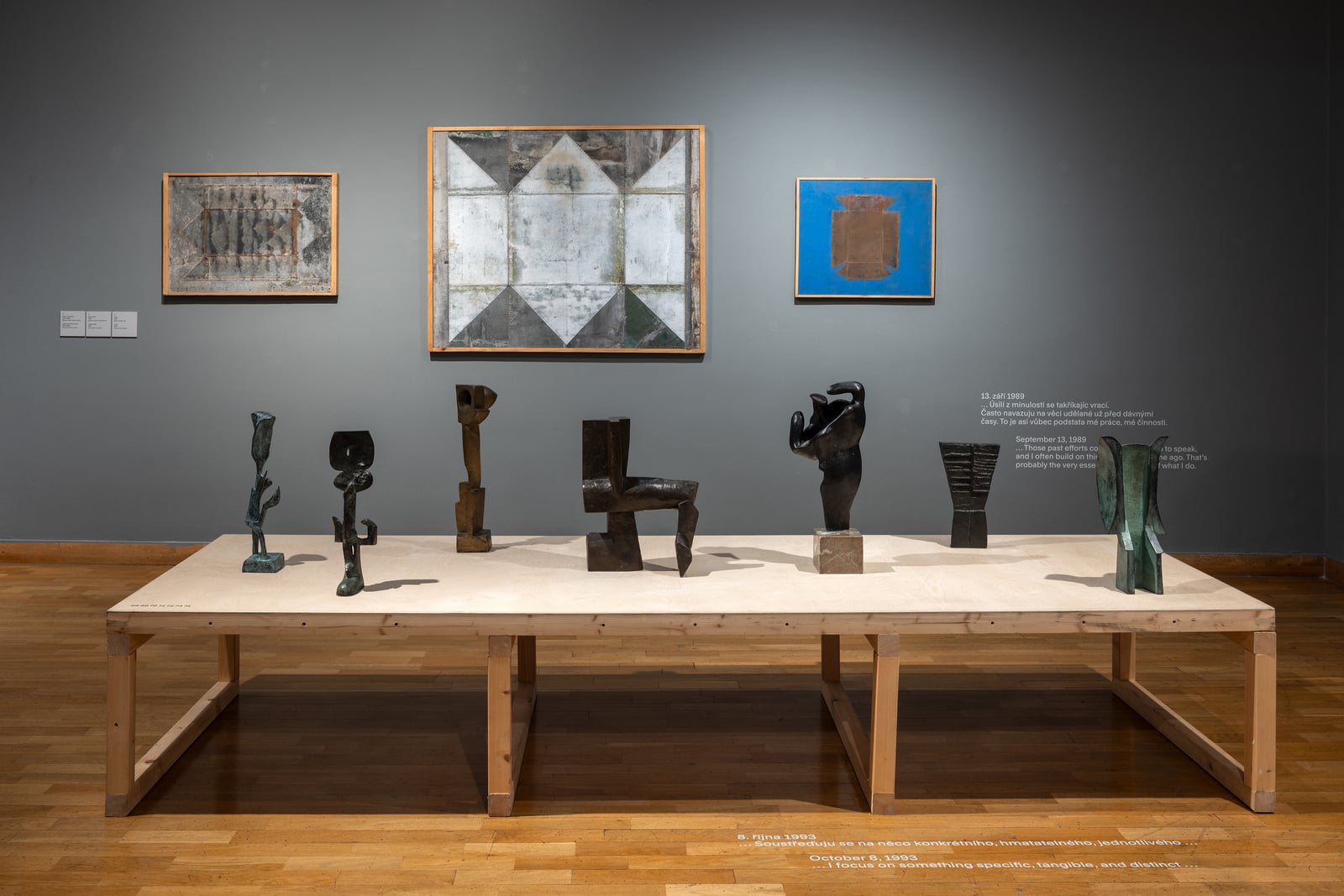
The second part of the exhibition, located in the Obrazárna, aims to present to viewers in a concentrated overview the most significant artistic tendencies from the end of the Second World War until the end of the 20th century, with several overlaps into the current century. The exhibition is introduced by examples of the work of important solitaires of the 1950s and artists who built upon the pre-war avant-garde. This is followed by post-war abstract art, i.e., works associated with various forms of gestural and structural abstraction. From the many contradictory tendencies of the 1960s, examples of Neoconstructivism, Kineticism, and so-called new geometry are presented, which further developed in the 1970s and 1980s. This section is logically followed by works of a conceptual nature from the 1970s and 1980s, complemented by selected examples of action art via a film loop.
In contrast to these positions are the paintings and sculptures of so-called New Figuration, Czech Grotesque, and later Existential Figuration of the 1970s and 1980s. The penultimate part of the exhibition belongs to postmodern manifestations, whose influence was clearly reflected in the art of the following decades. Compared to the original exhibition from 2013–2025, the new form is expanded, in conjunction with the first part of the permanent exhibition, to include works capturing the development of post-war landscape art and other diverse artistic approaches to the relationship with nature.
As already mentioned, not only Czech art is presented in the Obrazárna. In connection with the long-term acquisition efforts associated with the project of the Central European Forum Olomouc (SEFO), whose building will be realized in the coming years as an extension to the existing Museum of Modern Art, Czech post-war art is placed in a broader artistic context. The international context shows that art created in similar political, cultural, and social conditions shares many common features, but at the same time, the distinctiveness of individual expressions arising from local specifics cannot be overlooked.
Haptic Trail
The exhibition also includes an educational project, Haptic Trail: Closer to Art by Touch, authored by Denisa Tessenyi, which makes selected plastic works from the collections of the Olomouc Museum of Art accessible through 3D printed models, haptic elements, and verbal descriptions. In the exhibition antechamber and the adjacent CEAD space, it allows visitors to experience art not only visually but also through touch and multisensory experiences. It is intended primarily for people with visual impairments, but anyone who wants to discover art without barriers and in new ways can use it.
Century of Relativity II
AUTHORS AND CURATORS: Štěpánka Bieleszová (1900–1946), Štěpánka Bieleszová, Ladislav Daněk (1947–2000+)
LANGUAGE EDITING AND TRANSLATIONS: Hana Havlíčková, Zuzana Henešová
GRAPHIC DESIGN: Petr Šmalec, Kateřina Manková
SPATIAL DESIGN AND INSTALLATION: Vlastimil Sedláček, Michal Soukup, Filip Šindelář, Radka Žáková
PREPARATION OF EXHIBITS: Jakub Barna, Veronika Langer Klimszová, Anna Píšťková, Gabriela Polívková
HAPTIC TRAIL: Department of Typhlopedagogy, Palacký University in Olomouc, MUO Education Department
EDUCATIONAL PROGRAMS: David Hrbek, Denisa Tessenyi
STORIES FROM THE PERMANENT EXHIBITION (STORYTELLING)

Century of Relativity II
Permanent